Have you ever wondered how to help your children become natural lifelong learners? What does it take for them to be passionate about learning? How can you start this process at home? And how might you collaborate with your child’s school to cement their growth and learning?
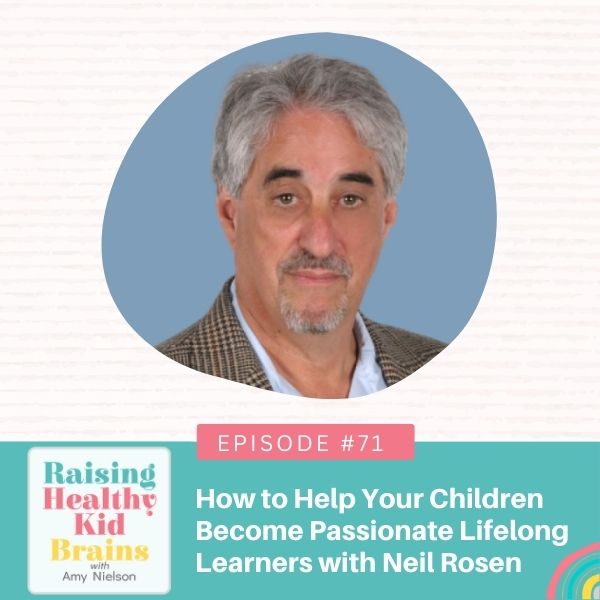
My guest this week, Neil Rosen, is a multifaceted and accomplished children’s book author with a diverse background in education, psychology, and entrepreneurship. Neil’s forthcoming book, Rediscovering the Village: Classic Strategies to Help Children Develop a Lifelong Love of Learning, explores strategies that shape a dynamic, engaging, and time-efficient home learning environment, and he’s here to share his insights with us.
Join us this week as Neil shares fascinating ideas on creating a learning-centered home environment and the importance of developing strong family-school relationships. We’re discussing how to create a culture of kids who are passionate lifelong learners, and how we can model this kind of behavior as parents.
To thank you for being a listener here, we made you a special freebie. It’s an amazing alphabet activity you can begin using with your kiddos that is so fun, so get started by clicking here to grab it!
How do you help your children become natural lifelong learners, just passionate learners for life? Today I’m talking to Neil Rosen who is a multifaceted, an accomplished author with a diverse background in education, psychology and entrepreneurship, a really fascinating man to talk to. Some really fun, interesting books and helps children find their purpose. But today we talked a lot about his book that’s coming out shortly, called Rediscovering The Village and it’s strategies for helping children become lifelong learners. He had some really fascinating ideas around creating a learning centered home environment and how you can do that.
One of the ideas that I learned from him that I’m very curious to try over the summer with my own children is having a family book club. I had not heard of this idea before and I kind of love it, so give that a listen and see what you think about that idea and if you want to do it as well. He also talks about how to develop strong family school relationships and bringing that back from decades ago when that was more of a thing. And how that can impact your child’s learning and lifelong learning. This conversation was interesting and fun. And I think you’ll enjoy it. It’s coming up right after this.
Welcome to the Raising Healthy Kid Brains podcast where moms and teachers come to learn all about kids’ brains, how they work, how they learn, how they grow and simple tips and tricks for raising the most resilient, kind, smart, compassionate kids we can. All while having lots of grace and compassion for ourselves because you know what? We all really need and deserve that too. I am your host, Amy Nielson. Let’s get ready to start the show.
Amy: Neil, welcome to the show. I’m so happy to have you on today.
Neil: Thanks, Amy. I appreciate you having me.
Amy: Yeah, this is going to be so fun. And I know that you’re a children’s book author, just can you kind of give us a little bit of introduction to you and how you got into what you do now?
Neil: Oh, boy, sure, I’d be happy to. I started out life as a teacher, which many children’s books authors did. And I taught elementary school. I taught fourth and fifth grade and I taught for a dozen years. But then I went on to get out into the world more as an entrepreneur. And I was the CEO of a company called National School Reporting Services. So I studied every public school in the United States.
And we were able to give families, relocating families for the most part, information if they were moving and helping them find what school districts could best meet their needs or were most similar to the district they were leaving and compared all of that. So I did that for a lot of years, worked with parents, worked with families, helped them find the kind of schools they were looking for and then eventually retired.
And when I retired, I started writing children’s books. And I’ve written about a dozen children’s books now. When I think about a children’s book, to me, the key ingredient in a children’s book is, does it start a conversation? If a child reads a book, I don’t care if they’re three years old or six years old or 10 years old, if they read a book, put it down and walk away, something was missing. If they read a book and ask you a question or start a conversation about something that was in the book, then the book is doing really what it needs to do.
Books need to open conversations between children and parents and give parents opportunities to understand what their children are thinking and how they think about things. So I started doing that. And then in the last couple of years I’ve continued to write. I’m writing now a new series of books called Can You Read Nature? And the idea is okay, now you’ve learned how to read a book, but can you read nature? And can you go outside and look at the sky and read the sky? Do you know that when the sky is full of birds, it’s going to be a nice day? And if you see the birds disappear, something’s going to change because they’re going into hiding.
And can you read a pond? And can you read, we’re doing national parks, can you read Arches National Park? And those are all rhyming books. And they’re really fun to read, tons and tons of facts and information, a fun rhyme to them. And it’ll get parents along with the other book I’m writing for parents. One of the key things these books are all going to do is get parents to be able to get their kids off their screens and get out to nature and get out of the house. And hate to say it, but also get parents off their screens.
Amy: Because we need that sometimes. They’re learning it from us, aren’t they?
Neil: They sure are. And leave the house and do things with them. So Rediscovering The Village is a book that another teacher and myself wrote in the 1960s and 70s, actually into the 80s when we were teachers. As teachers, we always found there were a few kids in the class who, when you’d see that first day of school. These were the kids you really wanted in your class because you knew they’d make the whole class better.
These were kids who loved to learn. Everything was an adventure. Everything was exciting. They weren’t turned off by this or that. They were just there to take it all in and do it and become a part of it. And we did a study over almost two decades of families of these children, what we called standouts. They stood out from the crowd for their love of learning. And most of them as we followed them on later on, even out into life, they maintained that love of learning where so many kids today get turned off to school and turned off to learning.
We studied the families and we talked with their parents and we were in their houses. And we’d started to identify what were the key traits that were in these families that let these kids grow up this way. And we found there were two. I mean, there were a lot of small tactics and things like that, but basically, there were two things. Their home was a very learning focused home, a learning centered environment that they set up. Some things that you’d think of as simple like making sure a kid has a quiet place to be and work and do homework and stuff like that.
But also doing all sorts of things together, not just getting your kids a lot of books to read but reading with them and talking to them about the books they read, the kind of things we were talking about it. And we put together 50 strategies that we are going to be publishing this summer on Rediscovering The Village. And it’s all about strategies in the 1960s and 70s when schools and families had much closer relationships than they do today. To help bring that back and to help families turn their kids into those kind of lifelong learners who really enjoy learning and it drives their life and for parents too.
Amy: I love this so much. This is something I feel like I’m really passionate about. And I had someone recently tell me because I am such a huge believer in creating a learning culture. I think it’s almost an identity. And I had a really interesting upbringing where I was taken in and out of schools all the time. I basically was led to like school myself, because we were homeschooling. But my mum didn’t, there were 12 kids and she didn’t have time to school all of us.
So basically, beginning of the school year, you go get the books off the shelf, you take the student edition and the teacher edition, and you go to your room, put them on your shelf, and then you’re in charge of educating yourself for the year. And by the way, next year we might be back in public school in a different state, and you have to be caught up. And so I’ve had so many people say, “How were you motivated as a third grader or a fourth grader to educate yourself?”
And I look back and I think about what that looks like. And now all 12 of these kids of my parents have university degrees and careers and things. And I look at that and I think, so there was something there beyond just you have to do this in this grade because that wasn’t there. There was not a lot of structure. I think that there was such a learning culture in the home that I grew up in. And that went for both academic type things but also learning all around that. And so it’s something I’m really passionate about. I grew up with it, I feel. And it’s something I try to create for my family.
But I’ve had sometimes people say, “Well, it’s probably just hereditary. You have this interest in learning or you’re better at these things because it’s hereditary.” So I would love to hear from you what you think. Could you give us just a couple, maybe not all 50, we don’t have time for that. But give us a couple of things that you think we could do to kind of create that experience, that culture in our homes for our kids to help them want to just, this is part of their identity, part of their culture to be learners, lifelong learners.
Neil: Sure. Let’s talk about reading just for a second. When kids are really small, parents read to their kids. They do that almost all the time before a kid starts to read. And then for a short amount of time when a child starts to read, the parent will read with the child. But once the kid is able to read, they’re done. The kid reads books and book and book after book after book. But it wasn’t the reading and the learning how to read that was as important as the time that was spent together. And there were conversations about the book. And the parent would point something out in the book.
And the child would go, “Oh, wow. I didn’t see that.” And you have all these kinds of conversations. And in a real learning centered family, it gets to the point where even when their children are teenagers and not everyone, but even when they’re teenagers, if you read once a month, if you read a book that your 14 year old is reading, it’s a game changer. It becomes a conversation. It delivers a message to the kid that you’re interested. And by the way, most of the parents who do that, love the books.
Amy: It’s true.
Neil: They would never think of reading it on their own. They’re reading Harry Potter or something and they’re reading it with a 12 year old or whatever or they’re reading a different book with a 16 year old. And it gives you so much information about where your kid’s head’s at, what they’re doing, how they’re thinking. But it opens those old conversations and all of a sudden the kid is drawn in. And you see, mommy, daddy, we’re interested in these things too. So that’s really one kind of thing.
Another thing which somebody brought up and I spoke to has been really part of the thing is the idea of notice. What do you notice? I mean, that’s really a big deal. Are you noticing, really noticing when your child does something well, when your child doesn’t do something well, when there’s a report card, an act of kindness? So one of the 50 strategies is a strategy to help you learn acts of kindness so that it rewards you with what we call a raindrop.
For every act of kindness, if you help mom do something, if you do something for a friend, if you even write a letter to your grandparents or whatever it might be. Getting people to notice more of these things, because so much goes on that they don’t notice.
Amy: And they want that. They want that validation or that attention, just some kind of reinforcement for the thing that they’re doing, for sure.
Neil: Yeah. I think it’s more than want. I think everybody, not just kids, everybody needs that. Everybody needs to just be noticed. Don’t be invisible.
Amy: Yes. And I wanted to go back and ask you something around the reading. I love what you spoke about the reading and reading the same books and being able to discuss it and get excited about it sometimes. I have kids that love to write and so they want to tell me the chapters they’re writing or the stories they’re creating and that becomes a fun conversation. But one thing I’ve noticed too with my kids that maybe are in the middle. So they don’t need me to necessarily read to them anymore.
But we have kind of a little bit of a tradition sometimes with my son who’s just turned 12. I read and my kids see me reading all the time. I love to read. So I’ll have my book and he’ll come and bring his book and climb in my bed on a Sunday morning. And we sit there and we have reading time and then nine year old sister comes and she climbs in with her book. And it’s just kind of this family reading time. And we’re all reading our own books but we’re reading together. Is that something that you feel would kind of help create some of this environment too, of encouraging kids to read and enjoy reading?
Neil: Well, I mean, sure, anytime you’re modeling learning behavior, your kids are learning that. And they are picking up those models and that’s becoming a part of what they do. The other thing you can do, that we do that, again some of these things sounds really hokey, but then you do them and it’s unbelievable. Take your nine year old daughter, is that how old she is?
Amy: Yes.
Neil: Alright, get your nine year old daughter and you and your son, whoever, the family, read a book that she’s reading because she’s the lowest reader. Once a month have a family book club.
Amy: How fun is that.
Neil: And it’s something I do. It’s something people can get on my website. It’s free and every month I send out books for different age groups. Plus I send out conversation starter questions. So you and your son and your daughter read a book, and pretty soon as she gets a little older, she’ll be able to read all the books that you will too. And then once a month, just have you all three read the same book, have a half hour conversation about the book.
And if time is really tight, do it when you’re riding in the car one day somewhere. But that’s a game changer. That really, you’ll be amazed at how much that changes the way all three of you think about it.
Amy: I love that.
Neil: [Crosstalk] will enjoy reading a nine year old book.
Amy: Yeah, they are really fun. I’m just trying to think of some of the ones she just read. She just finished The BoB Competition with the PTA, the Battle of the Books. And I’m thinking some of those books she read were so fun. I would absolutely read them. So I love that idea, family book club. I’ve never heard of that before. That sounds amazing.
Neil: Read them and talk to them. It’s all about talking to them. One of the mantras that we have is get rid of your babysitters. Everybody used to know a TV was a babysitter. And now the screens have become babysitters. But unfortunately, books have become babysitters. Go read your book. And what you’re really saying is get out of my hair and go do something over there. And it’s not good for me to tell you to go on your screen so I’m telling you to go read a book, get rid of your babysitters. These are babysitters.
The same thing with television. When was the last time you watched a National Geographic or an educational show on TV with your kids and talked about it, had a discussion about it?
Amy: Yeah, we love those.
Neil: Yeah, but you probably do that.
Amy: We do some. I mean, I could definitely do it more and they do like to watch people playing video games on YouTube, which I still struggle to understand how that’s fun, but it is some. And I love the idea too that we don’t have to be perfect about taking these steps, adding some of this in and what’s one you could start? So could it be watching, we watched not too long ago a National Geographic about mummies, and then we made mummies out of candy. So we had our sour patch kids, and we were wrapping them in fruit roll-ups and making our mummies.
And then we built structures out of rice crispy treats that were our burial temples and did this whole ancient history kind of thing. And so they were fascinated by the TV show about mummies because we were bringing it somehow into our kitchen and making it somewhat real to them. Anyway, so I think that can be a thing. I don’t think it’s something we do every day but I think starting to try to find ways to bring that in, is it family book club? Is it discussing a book that they read?
Neil: None of it has to be done every day. But it’s very different from, there’s a great National Geographic show on [inaudible] about dinosaurs. The difference between sitting down and watching it with him and him watching it to get out of your hair, the message you’re delivering is so different. And these are all simple things, and none of them have to be done every day. Once a month, take a 15 minute walk outside with each of your kids, 15 minutes once a month take your kid outside for a 15 minute walk one-on-one, just the two of you. Sometimes nothing will happen. Sometimes miracles will happen.
Amy: That’s so true. I love that. And is that where you ask them about reading the sky and just noticing and paying attention and getting curious about kind of things that are happening?
Neil: Absolutely, yeah, in the book. And it gives you little things you can do. You can make a little sundial with just some rocks and a stick. And there are different kinds of things. But more importantly, it’s really about, that reading is being aware of everything that’s around you and just being aware of the outdoors. Anytime you go outside, it’s a win. Anytime you get out of that house and outside, it’s a win for everybody. If it’s going for a walk, if it’s sitting on the porch, if it’s playing in the backyard. All of a sudden the screens are gone or put aside and you’re living in it. It’s a very different world. The screens have really become a problem.
Amy: It is. I loved, in a book that I read called Curious, the author’s Ian Leslie if I remember right, but he talks about creating more mysteries than puzzles. He says we’re kind of at a puzzle world where there’s a question, and then we go Google it or watch a YouTube video and there’s an answer. And then you’re done, your curiosity has ended. You have solved it. It’s done. You’ve done a puzzle once, you don’t really need to do it again necessarily. And he said, we need to create more mysteries.
And I love this idea of what you’re talking about, of going outside and just being aware, noticing and asking questions and having conversation. I feel that’s such a beautiful way to kind of bring in more mystery and just thinking about things and having conversation instead of having to, well, let’s go Google this one thing and have an answer and be done. So I love that idea of just kind of creating space for conversation and curiosity around things.
Neil: What I believe happens and I’ve seen it happen in lots of children, is that when you do something like that, they come back into the house knowing they’ve learned something. It was fun and I learned something. I went out and wow, I looked up to the sky and I saw a cloud and I now know that that cloud means something. Or that today there weren’t any birds around and that means something or all of these different things. And that’s what’s called a lifelong love of learning.
It’s not a lifelong love of having books in front of you and memorizing things and learning that way. It’s that, wow, yes, I’m learning. I learned how to do something today. I learned how to be safe around a pond. I learned about different fishes that were in that pond. I learned about why birds nest close to a pond and I saw a bird’s nest. And that’s the kind of learning you want to teach.
Amy: Because it can go with you anywhere, because if you become aware then learning can happen anywhere. And I think also it opens children up to this idea that learning isn’t just something that happens with a textbook inside a classroom. Learning is something that happens the minute you go outside or the minute that you are in the kitchen and trying to cook something with your mom or playing in the garden or whatever. So I love that idea, that piece of it.
You said that one of the things that was important was creating strong family school relationships and how that used to be more of a thing and isn’t so much anymore. Can you tell me a little bit more about that?
Neil: Sure. I mean one of the big things when I was a teacher and that was way back when was that families and schools worked together. It was kind of a real mutual respect. That there was at least an understanding that teachers were trying to do the best they could and were hard workers and were there for your children and stuff like that. And teachers had the same thing, the families were kind of their partners. It was very easy to communicate, number one, between parents and teachers and people were excited about it.
You’d have your parent conferences. But you’d also, it would be very normal for a teacher to write a note to a parent or a parent to write a note to a teacher, not about something horrible that happened, but actually about something nice that happened. If you’re going on a field trip, parents would go with you and things like that. So that, it’s sort of become over the last, well probably a long time, it’s probably been 25/30 years now that it’s sort of been moving in this direction. Where parents and teachers and schools are sort of in conflict rather than in harmony, which is really a problem.
But individual parents just one at a time on their own, when a kid comes home from school one day and said, “We had so much fun doing this today.” And you write a note to the teacher saying, “Thanks, Johnny had a great time today on that math project you did”, or whatever else it was. It changes everything specifically for your child.
Number one, your child’s going to get more information from that teacher and going to get more attention from that teacher because the teacher, they have a child whose parents not only are interested but appreciate what’s going on in the classroom. And then there’s a whole bunch of other kind of tips in there to do that. But mostly it’s really about staying in communication and keeping those doors open and being aware of what’s going on. Again, it always gets back to that same word, notice.
Now it’s about parents noticing what is happening in school and then not just filing it away, but actually doing something about that. And it makes a very big difference and we’ve got to get away from the wars that are going on in so many ways in this world.
Amy: Yeah, it’s more collaboration. It is a struggle and I feel in some cases I’ve seen it done well. And I think people are trying and in other places it does, it feels like you’re, I don’t know, it just feels like a little bit of a battle. I think sometimes teachers feel it is too. They’re trying to kind of work with what they have been given and from their administration and trying to do the best they can. And then parents are feeling frustrated and I don’t know, it’s just yeah, it’s hard.
And so I love that idea that you shared of just trying to find ways to show gratitude more often and maybe even offer help because our teachers are given so much. They have so many students, and they have so much they’re expected to do. And so even if they have amazing ideas, they might not functionally be able to do it with the different behaviors they’re dealing with, or the number of students they have, or all of the requirements they have. And so is there an opportunity to offer to help more often and kind of spread what they have further, make more possible by helping?
Neil: Some parents have time to do it. Some parents don’t have time, but you’re right.
Amy: Sure, but everyone has time to write a note, I think, and I think that was the point that you brought up.
Neil: Everybody has time to write a note and everybody has to. It’s where you get your information. If you’re getting your information that this school has all these problems and there’s so many bad teachers, there’s so many problems and this and that as compared to getting the information first hand. If you get the information by talking to the teacher, by going to a parent teacher meeting, by going to a school board meeting, whatever.
If you get your information, you’re going to see it’s very different than you think it is. Probably one of the biggest differences between then and now was the age-old concept, the benefit of the doubt, I think.
Amy: Yes, I was going to say that, assuming positive intent.
Neil: Assuming positive intent. Both teachers and parents have to do it because teachers get worn out when all they get are negative comments or something like that. It used to be that if Joni failed a test, there’s something that a teacher would sit down with the parents and they’d really work on it together. Now it’s maybe for a lot of parents, “It’s the teacher’s fault. You don’t know how to teach Joni, so that’s why she got a bad score.” Or it’s the parent’s fault. You’re not giving her enough help at home. But it’s not what you just said, it’s not collaborative and that’s what it needs to be.
And you can make that as an individual parent one-on-one with your kid and your school, you can make that happen.
Amy: It’s so interesting. And you say that in the book there are some tips on that too, some of the suggestions you have, lots of tips for doing that. This is so good. I am so excited that you wrote this book and that you’re finally getting it out into the world so that we can all benefit from it. When can we expect that book to be available so that we can read it and use that as a resource?
Neil: We don’t have the date but it will be the end of the summer.
Amy: End of the summer, okay.
Neil: And I’d be happy to send you an early ARC of the book, a reader copy of the book so you can get a feel for it.
Amy: I would love that. Thank you very much, yeah. And we will include links. Can we tell people where to find you now and your other books and then maybe even get on an email list or waiting list for when that book comes out?
Neil: Sure, absolutely, yeah. My website is www dot nmrosen R-O-S-E-N dot com. Also it’s professorstork.com. I write all of my children’s names under the name Professor Stork. I’m a Gemini.
Amy: It’s so fun.
Neil: [Crosstalk] Gemini, so I split myself right in half and I write children’s books as Professor Stork and adult books as N.M. Rosen. No, I think you’ll find the books great. They’re books that has free coloring books there through all of the books, you can have coloring pages. And one series of books that I wrote, two are coming out in the next few months.
So the first book was called Penelope and Jack Together Apart. And it was about a boy and a girl, young, 9/10 years old, who were isolating during COVID and they lived in the city and they lived in apartments on opposite sides of the street. They developed a balcony relationship and they made friends across balconies during COVID.
Amy: I love it. That’s so good.
Neil: So they’re books with a purpose, books always with things kids will talk about. I’m not 100% successful, but I work hard to make that happen where kids are going to want to do that. I have a graphic novel about a girl who’s a little bit older, who has a girl moving to town from Jamaica and join their classroom. And the whole book is about what she goes through in terms of what it takes to really make friends with her, is intrigued by her, but is scared of her, all this stuff happens and it’s another book.
But a lot of it has to do with, it’s called Grow Your Circle and a lot of it has to do with conversations with her parents about circles and what circles are. And how important it is to grow your circle, because growing your circle is how you grow your mind, that’s how you grow your life. And people who get stuck in their circles. At school that happens a lot. These 10 girls get together and there’s no room for an 11th. So that’s the whole book.
Amy: This is so good. I love the purpose behind your books. Alright, well, we will send everyone to professorstork.com to go find some of your books and get started on those. And we’ll look forward to the Rediscovering The Village that’s coming out later this summer. And thank you so much for taking the time to come and chat with me today and share your wisdom. I appreciate it.
Neil: It’s been great. They can also sign up, by the way, for the Family Book Club, which I was telling you about, which is free. So on the website they can sign up for that and they’ll start getting recommendations of books based on age.
Amy: Love it. That’s fantastic.
Neil: Thank you so much. Thank you.
Amy: Thank you for coming on. I appreciate it.
Don’t you just love all the fun things we’re learning on the show together? Well, we wanted to give you a chance to practice a little bit of it at home. And so we made you a special freebie just for being a listener here and you can grab it at planningplaytime.com\special-freebie. That is planningplaytime.com\special-freebie. So what this freebie is, I’ll tell you, is an amazing alphabet activity that you can start using with your kiddos and it is based in play and is so fun.
You can use dot markers with it, you can use Q-tip painting, you could use circle cereal. There’s all kinds of options, but you can print it out today and get started. Just head over to planningplaytime.com\special-freebie and we’ll send that to you right away.
Thank you for hanging out with me today for this fun chat on Raising Healthy Kid Brains. If you want to see more of what we’re doing to support kiddos and their amazing brains, come visit us on our website planningplaytime.com. See you next week.